Solar guide
How Does Solar Power Work in Costa Rica?
Solar panels turn sunlight into DC electricity, an inverter converts it to the AC power your property uses, and any surplus can be stored in batteries or, where permitted, shared with the grid. Costa Rica's strong sun makes it well suited to solar.
- Panels
- Inverters
- Batteries
- Grid connection
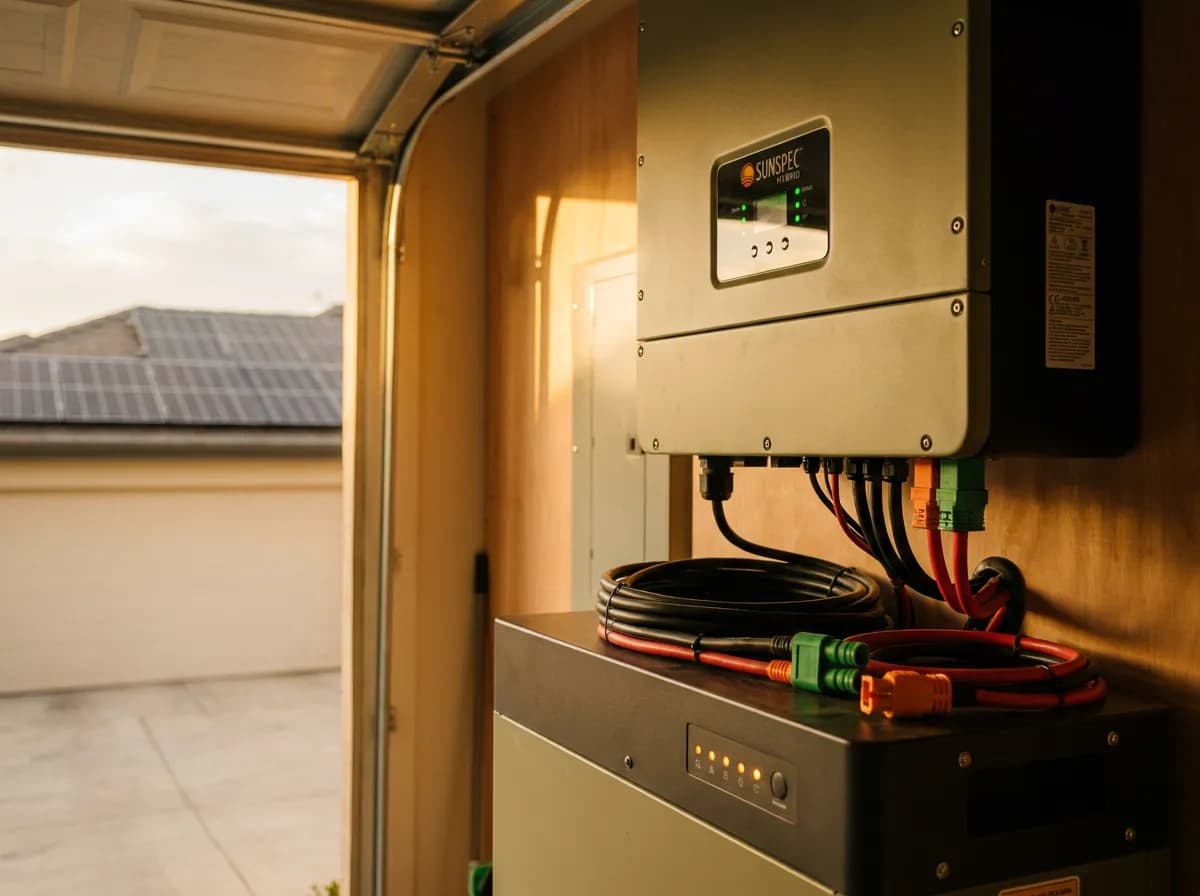
The main parts of a solar system
Solar panels
Photovoltaic cells produce direct current (DC) when sunlight hits them.
Inverter
Converts DC to alternating current (AC) for your appliances. Hybrid inverters also manage batteries.
Batteries (optional)
Store energy for evenings and outages. Lithium iron phosphate (LiFePO4) is a common choice.
Mounting, wiring and protection
Racking, cabling, breakers and grounding connect everything safely to your electrical panel.
Grid-tied, hybrid and off-grid systems
Grid-tied
Works alongside the utility grid and lowers the power you draw from it. Standard grid-tied inverters shut down during an outage for safety.
Hybrid
Adds batteries so selected loads keep running at night and during outages while staying connected to the grid.
Off-grid
Runs independently of the grid with panels, batteries and often a backup generator. Common for remote land.
Do I need batteries?
Not always. If your goal is lower bills and the grid is reliable, a grid-tied system may be enough. Choose batteries if you want backup during outages, want to use solar energy after sunset, or live off-grid. See our battery storage page for sizing considerations.
Grid connection in Costa Rica
Connecting a system to the grid involves your local distribution utility and applicable regulations, which can change. We recommend confirming the current requirements for your connection during your consultation rather than relying on general information.
Frequently asked questions
Panels stop producing. A grid-tied system draws from the grid, and a battery system draws from stored energy.
Standard grid-tied systems shut off for safety. Hybrid systems with batteries can power selected loads.
Often yes, if the inverter is designed for it. Mention this during planning.
Only in Costa Rica. Our guides are open to readers everywhere.
Explore more solar solutions
No cost. No obligation.
Planning a solar system in Costa Rica?
Tell us about your property and we will explain which system type fits.